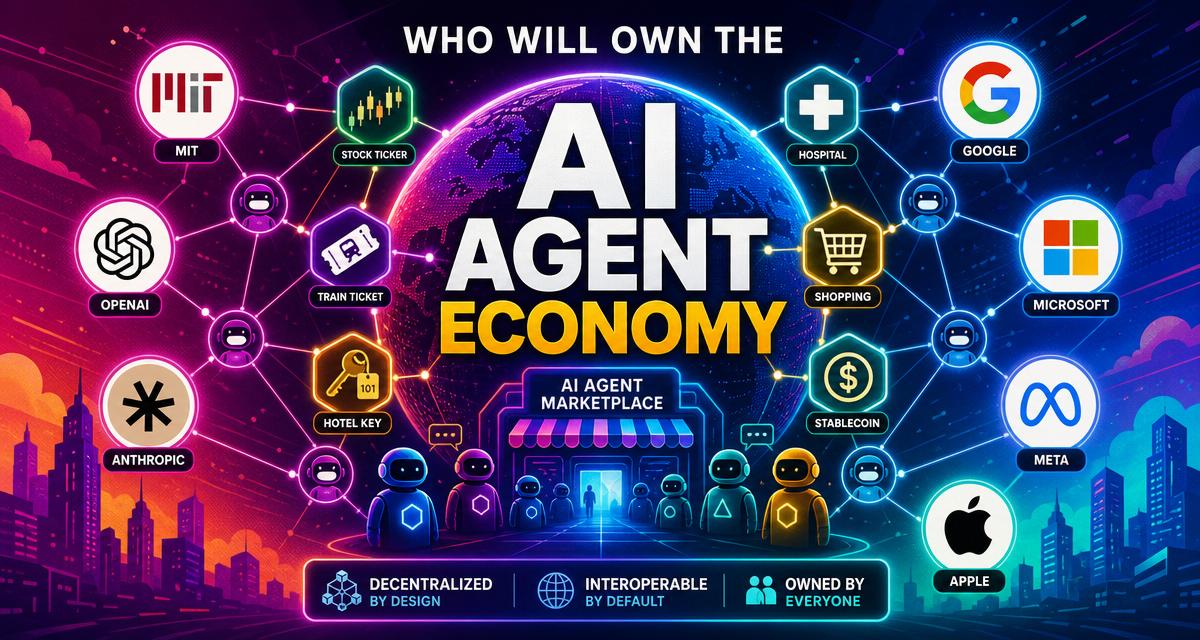
AI Agents Need Crypto Rails: Inside Circle's Arc and the USDC Agent Economy
Circle just launched Arc and a developer toolkit for AI agents that transact, access services, and pay in USDC. Here's why crypto — not banks — is becoming the default payment layer for the agent economy.
88 Labs AI
Editorial Team
# AI Agents Need Crypto Rails: Inside Circle's Arc and the USDC Agent Economy
For the last two years, the AI conversation has been about what agents can do — write code, qualify leads, book meetings, run support. The next conversation, the one that actually unlocks an autonomous economy, is about something much more boring and much more important: how agents pay for things.
Circle just made a very loud bet on the answer.
What Circle Announced
Alongside Arc, its new payments-focused Layer 1 blockchain, Circle unveiled a developer toolkit for building AI agents that manage transactions, access services, and pay in USDC. The pitch is that any agent — a research assistant, a procurement bot, a travel planner, a finance ops automation — can hold a wallet, sign transactions, and settle in stablecoins without a human in the loop.
Circle CEO Jeremy Allaire was unusually direct:
> "We're entering this era where software machines will power the economic system. Software will do most of the work — that is what AI agents represent."
That's not a marketing line. That's a thesis statement about where the next decade of fintech infrastructure is going.
Why This Matters: Agents Are Locked Out of Bank Rails
Here's the part most enterprise teams haven't internalized yet.
Every traditional payment rail — ACH, cards, SWIFT, real-time payments — assumes a human, identifiable account holder with KYC, a phone number, a billing address, and legal liability. Banks are not set up to issue accounts to software. They're regulatorily and operationally allergic to it.
That creates a structural problem:
Crypto rails — and stablecoins in particular — solve this almost by accident. A wallet is just a keypair. An agent can have one. Settlement is near-instant. Fees on purpose-built chains like Arc can be fractions of a cent. There's no "computer says no" because the agent is the computer.
What Arc + USDC Actually Enable
Concretely, the toolkit Circle is rolling out lets developers build agents that can:
1. Hold and manage their own wallet with programmable spending limits and policies.
2. Pay other agents and APIs in USDC, settled in seconds.
3. Access gated services (data feeds, compute, premium tools) by paying per-call instead of via an annual contract a human had to sign.
4. Receive revenue — yes, agents that sell services to other agents and get paid directly.
If you squint, it's a B2B SaaS economy where the buyers and sellers are software, the contracts are smart contracts, and the currency is a regulated US dollar stablecoin.
The Bigger Industry Shift
Circle isn't alone. This lines up with a broader pattern we've been tracking:
The takeaway is consistent across all of them: AI agents are structurally locked out of traditional bank rails, and crypto — specifically stablecoins on fast, cheap chains — is emerging as the natural payment layer for an agent-driven economy.
What This Means for Operators
If you're running a business and deploying AI agents (or thinking about it), three things are worth internalizing now:
1. Plan for agents as economic actors, not just chatbots.
The agents you deploy in 2026 will likely need to pay for tools, data, and other agents' services. Architect for that — don't bolt it on later.
2. Stablecoin payments are not "crypto."
USDC is a regulated, dollar-backed instrument issued by a US-licensed company. Treating it like Bitcoin is a category error. It's closer to a programmable ACH that actually works in seconds.
3. The agent economy is a B2B economy.
The first wave of monetization won't be consumers paying agents. It will be agents paying agents — for data, compute, automations, and specialized capabilities. That's a much bigger market than most people are pricing in.
The 88 Labs Take
We build custom AI agents for businesses, and we've been watching this space closely because it directly affects what becomes possible in the next 12 months.
A booking agent that can pay a confirmation deposit. A procurement agent that can settle a vendor invoice the moment goods are received. A research agent that can subscribe to a data feed for one query and unsubscribe immediately. A support agent that can issue a partial refund without escalating to a human.
All of those are bottlenecked today by payment infrastructure, not by AI capability. Circle's Arc — and the broader stablecoin-for-agents stack — is what unblocks them.
The companies that figure this out early will run leaner, faster, and with less human glue holding the workflows together. The ones that don't will keep paying employees to push buttons that an agent could push for $0.001 in USDC.
Want to see what an agent that actually transacts could do for your business? Book a free demo and we'll show you a working build in days.
Ready to see this in action?
Get a free, personalized demo of an AI agent built for YOUR business.
Get Your Free Demo