AI System vs AI Agent: Dashboard or Remote Employee?
A traditional AI system is a smart dashboard. An AI agent is a remote employee who takes the keys, makes a plan, and ships the work. Here is how they differ in action.
88 Labs AI
Editorial Team
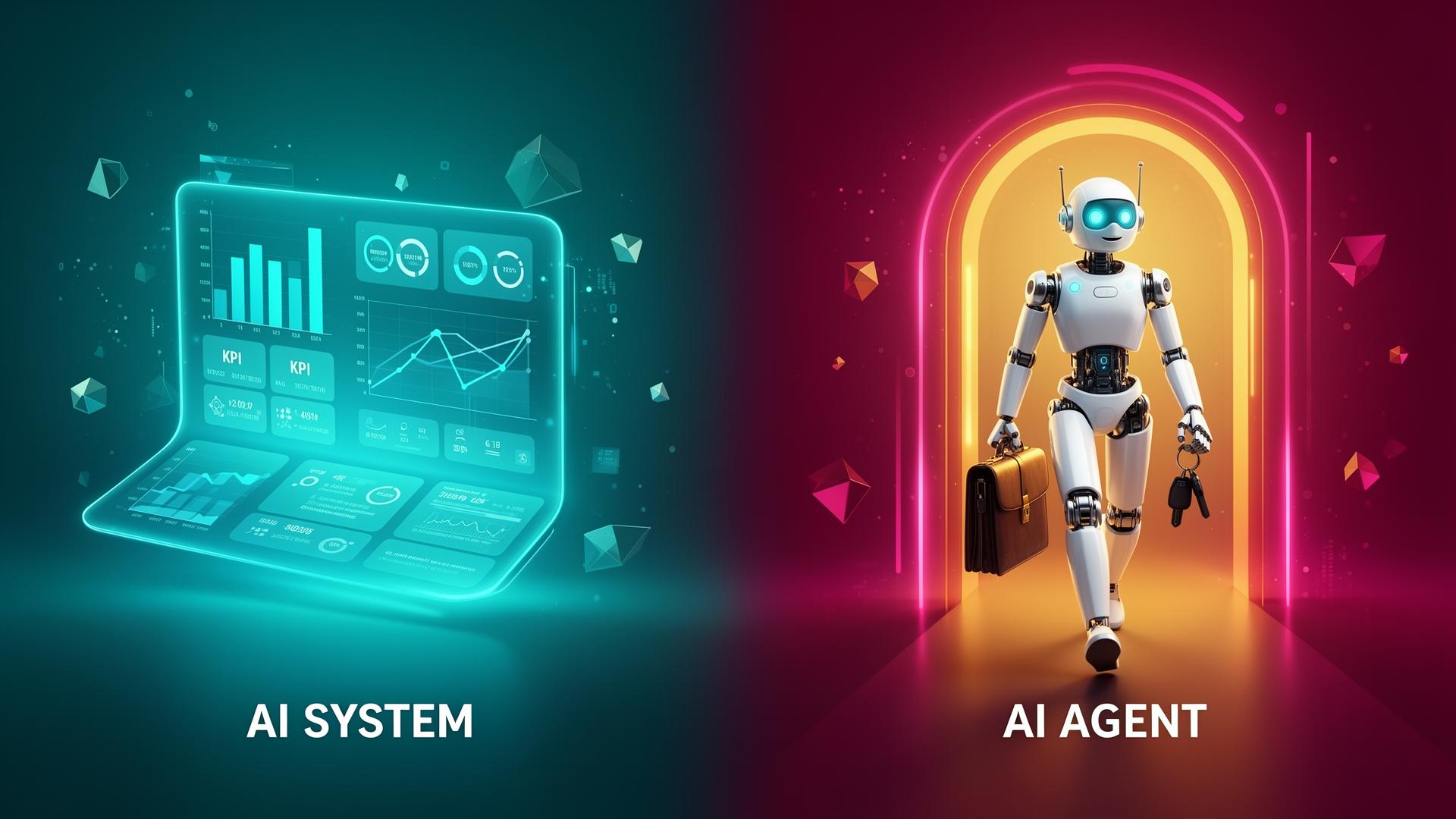
Think of the difference between an AI system and an AI agent like the difference between a smart dashboard and a remote employee. One processes and displays information when prompted. The other takes the keys, makes a plan, and goes out to do the job for you.
Here is how they differ in action — and why this distinction is reshaping how businesses buy software in 2026.
1. The Core Differences at a Glance
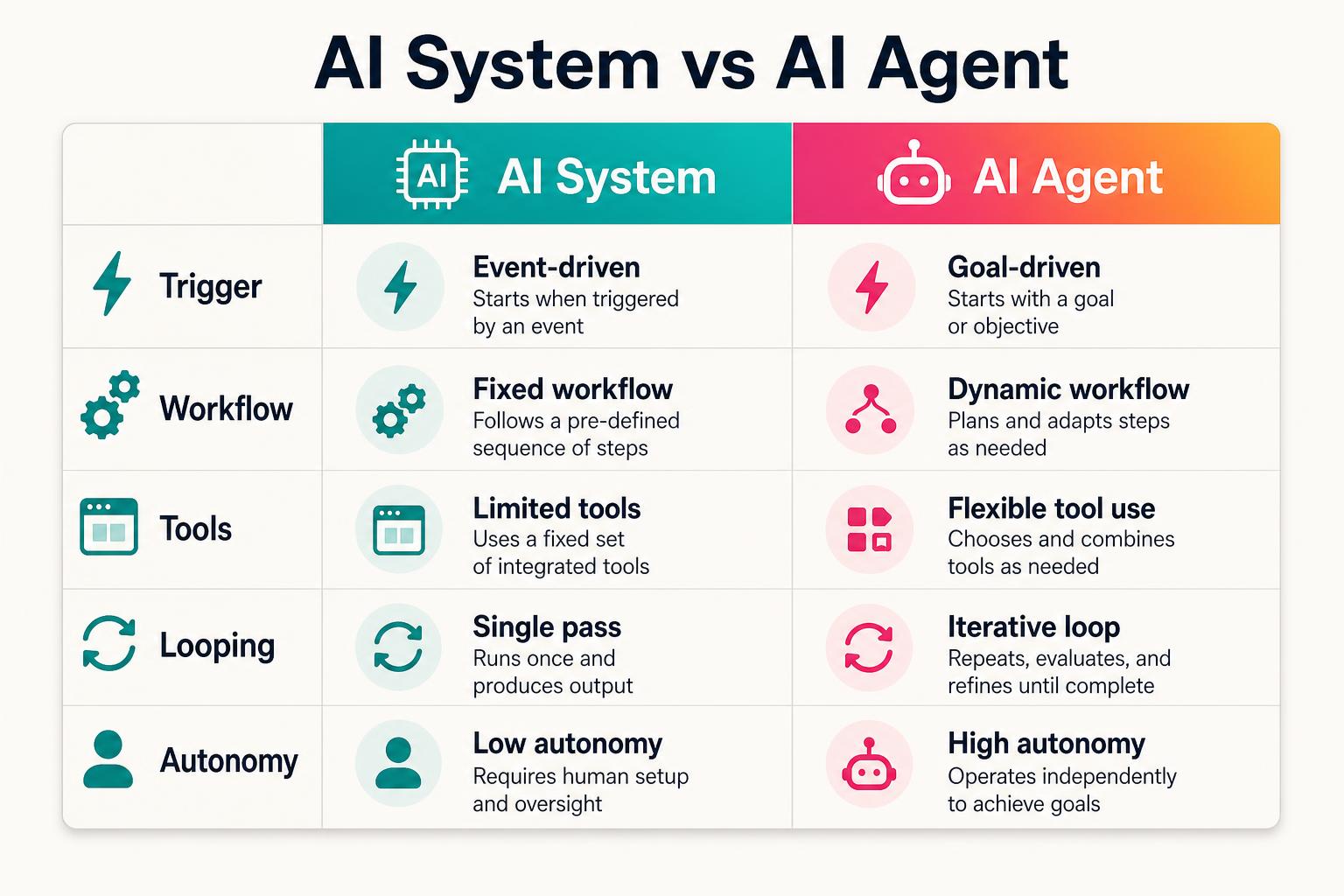
Trigger
Workflow
Tools
Looping
2. Deep Dive: AI Systems
An AI system is a broad umbrella term. It refers to any combination of algorithms, data, and hardware that processes information to perform a specific task — like predicting the weather, translating text, or generating an image.
How it works: It requires constant human steering. If you ask a standard Large Language Model (an AI system) to "write a comprehensive market report on the EV industry," it will instantly generate a response based on what it already knows. If it runs out of space or hits a roadblock, it just stops.
Key Characteristic: It lacks autonomy. It is a tool used by a human.
3. Deep Dive: AI Agents
An AI agent is a specialized type of AI system designed to act autonomously to achieve a specific goal. It doesn't just predict the next word or classify an image — it reasons, plans, executes, and adapts.
How it works: Give that same EV market report task to an AI agent and it won't just type out an immediate response. Instead it will:
Key Characteristic: It possesses agency. It works on behalf of a human.
4. The Travel Agent Analogy
If you are booking a vacation:
The system gives you options. The agent delivers the outcome.
5. Why This Matters for Your Business
Most "AI features" being sold today are AI systems wearing an agent costume — chat windows that summarize, suggest, or draft, but still wait for a human to do the actual work.
A real AI agent moves the work off your desk:
The unlock is not "smarter answers." It is hours back per week because the agent closes the loop on the task instead of handing it back to you halfway done.
6. How to Tell Which One You Are Buying
Ask the vendor three questions:
FAQ
What is the simplest definition of an AI agent?
An AI agent is software that uses a large language model to autonomously plan, take actions with external tools, and self-correct until a goal is achieved — without needing a human prompt at every step.
Is ChatGPT an AI agent?
The base ChatGPT chat experience is an AI system — it responds to prompts. ChatGPT becomes agent-like when given tools (browsing, code execution, file actions) and a multi-step goal it can pursue on its own.
Do I need an AI agent or just a chatbot?
A chatbot answers questions. An AI agent completes tasks — booking, scheduling, updating records, following up. If your bottleneck is "things not getting done," you need an agent. If it is "people can't find an answer," a chatbot is enough.
How fast can a business deploy an AI agent?
With 88 Labs AI, most agents are scoped, built, and deployed in days — including phone, calendar, CRM, and email integrations.
Ready to see this in action?
Get a free, personalized demo of an AI agent built for YOUR business.
Get Your Free Demo